AI, Cybersecurity, Software Engineering and Beyond.
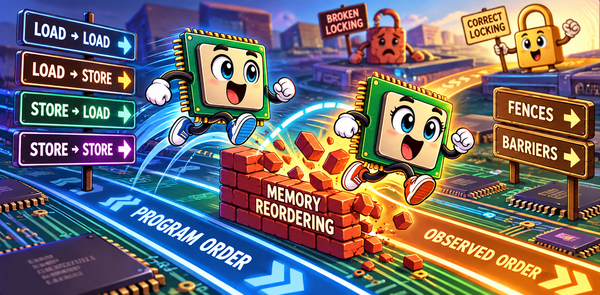
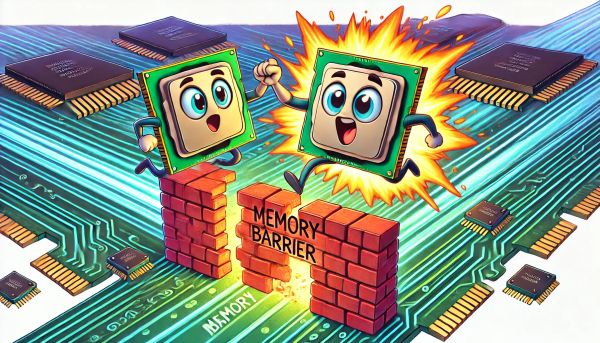
When developing code for a multiprocessor system, it seems natural to use multiple cores. However, writing multithreaded code is more than just launching different threads to execute code in parallel by exploiting TLP, as threads sharing memory may communicate implicitly through loads and stores. Modern cores may reorder many memory

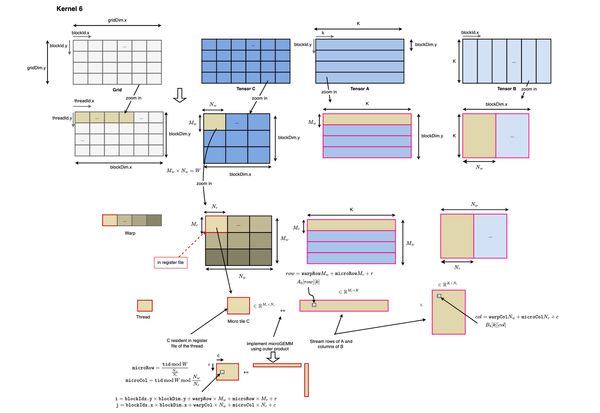
In this post, we will talk briefly about GPU and CUDA programming. Specifically, we will present the basics needed to understand the microarchitecture components involved during kernel computation. We will next discuss how to perform GEMM or General Matrix Multiplication using GPUs. Deep learning inference and training are computationally expensive.
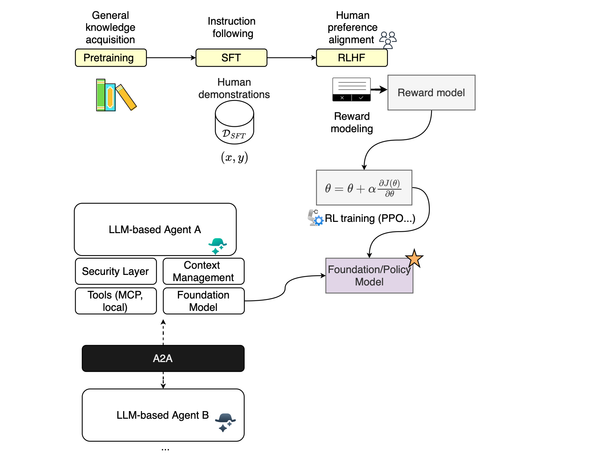
The goal of this post is to briefly present how multi-agent systems emerged by looking at some of the history and the cognitive backbone of AI or LLM-powered agents. An autoregressive language model, which will be denoted as \(p_\theta\) (or \(\pi_\theta\) in RL terminology), is a
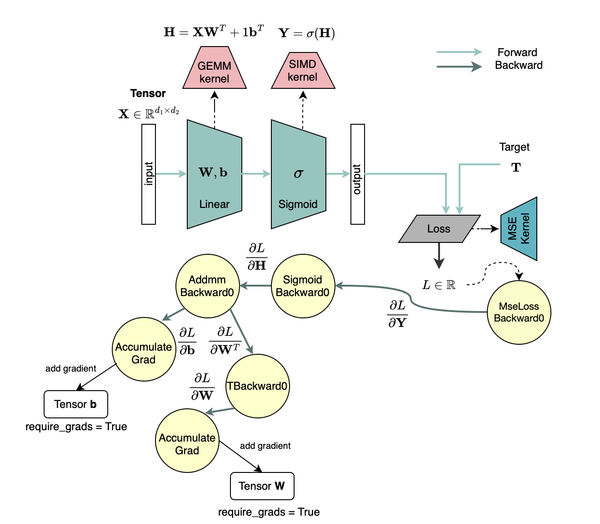
Deep learning has reshaped the landscape of machine learning. It achieved overwhelming advantages across diverse domains, from image classification, video and text generation, to enabling multi-agent development (agents use foundation autoregressive models trained with SGD as their brains). In order to reduce the cognitive burden on practitioners, the inner
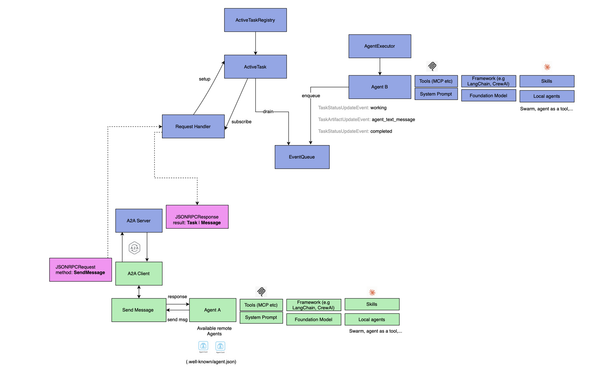
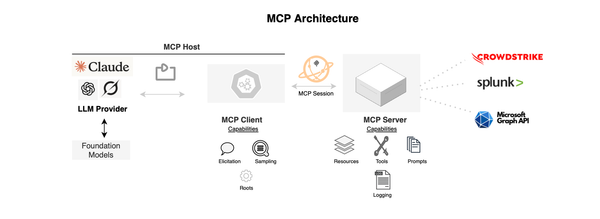
The goal of this post is to provide an in-depth look at standardizing how heterogeneous agents discover, authenticate, and communicate with one another by examining the Google's Agent-to-Agent (A2A) protocol [1] (covering both theory, practical deployment and security). The post will present the foundations of
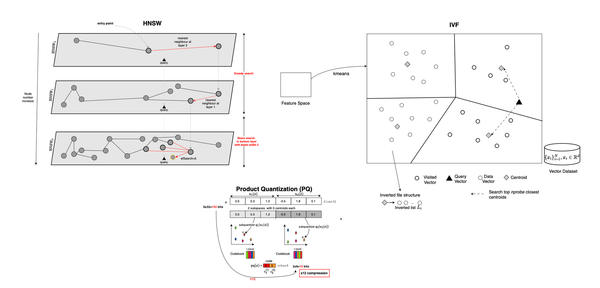
The goal of this post is to explain how vector similarity search works internally. Why is this interesting? Because Retrieval-Augmented Generation or RAG is typically implemented using vector search over text embeddings. Embeddings are basically a bottleneck that compresses the semantics of a paragraph or chunk into a continuous
This post summarizes the main implementation patterns used by modern multi-agent frameworks including agents-as-tools, handoffs, routing, reflection, group chat, debate, Magentic-style ledger orchestration, dynamic subagent spawning, and mixture-of-agents architectures. The Brain: Foundation Models Well, the first thing we need to build an agent is
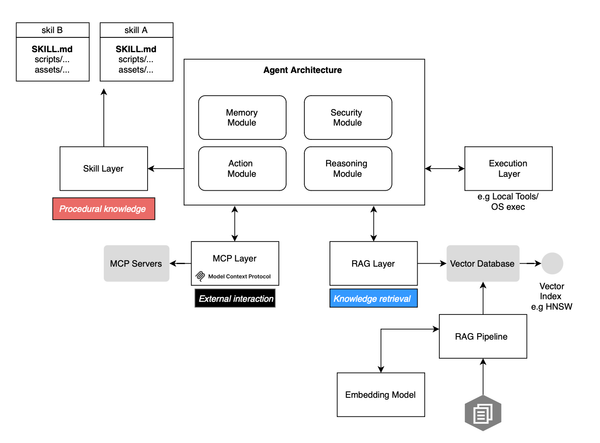
Introduction A straightforward approach to augment large language models or LLMs with new capabilities is through in-context learning. The model is provided with a small number of examples that demonstrate how to solve a task, after which it generates a response using its inherent capabilities combined with the knowledge
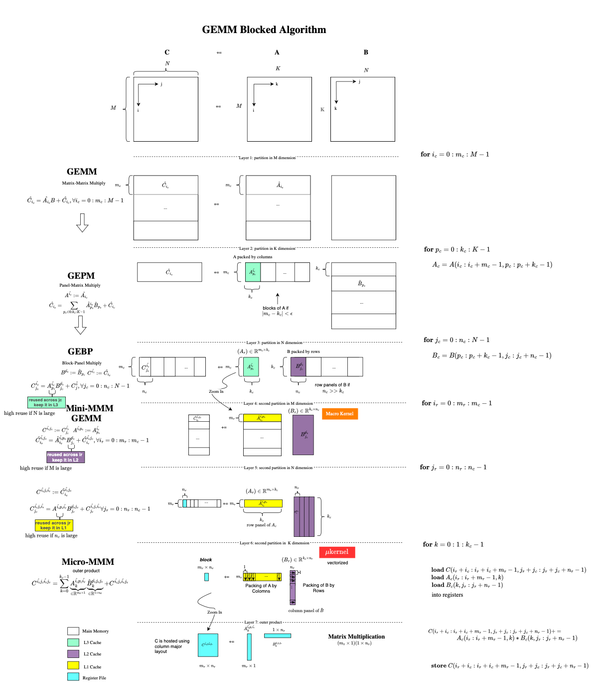
Implementing highly efficient matrix multiplication routines that approach peak performance demands significant effort, strong linear algebra knowledge, and a deep understanding of the underlying hardware architecture (even down to the microarchitectural level[23]). This is why vendors provide highly optimized implementations of the Basic Linear Algebra Subprograms (BLAS)[1], including